COMMENT | Every year, when the public university admissions (UPU) system is being updated, those of us in civil society and NGOs serving persons with disabilities brace ourselves for the flood of panicked pleas from disabled students desperate to pursue higher education yet denied their rightful course choices because of arbitrary and discriminatory restrictions.
Despite repeated assurances from the Higher Education Ministry that this issue was resolved, it continues to resurface, leaving students traumatised and their futures jeopardised.
This is not a new problem. As far back as the 1970s, disabled students have raised concerns about exclusionary practices in Malaysia’s education system.
As understanding and recognition of disability has grown over the decades, our systems have unfortunately not caught up in terms of accessibility.
In 2021, UPU’s system was found to be automatically filtering course options for applicants who declared their disabled status, restricting them to “disabled-friendly” programmes regardless of merit.
Disabled students who had done incredibly well academically were excluded from competitive courses of their choice, like engineering and sciences, solely due to their disability status.
Since then, efforts were made via various stakeholders, activists, and policy advocates, which led to the ministry acknowledging that this violated Malaysia’s obligations under the UN Convention on the Rights of Persons with Disabilities (UNCRPD) and agreeing to remove the tagging.
By 2022 and 2023, the Higher Education Ministry publicly stated that the filtering mechanism had been fixed. Yet in August 2025, we again see multiple reports surfacing.
In one of the recent cases this year, one student reached out to an autistic advocate: he explained that despite scoring a perfect 4.00 in PSPM (Peperiksaan Semester Program Matrikulasi), eight of his preferred courses, including civil engineering, vanished from his UPU account simply after entering his disabled status.
Another student who also met all the requirements for a mathematics programme described being inexplicably blocked and redirected to unrelated courses.
These are not isolated incidents. They are part of a recurring pattern where disabled students with proven merit are stripped of their choices upon disclosure of disability status.
We’ve even seen the responses they receive. Automated and scripted system messages that reveal a poor understanding of what support an autistic student needs.
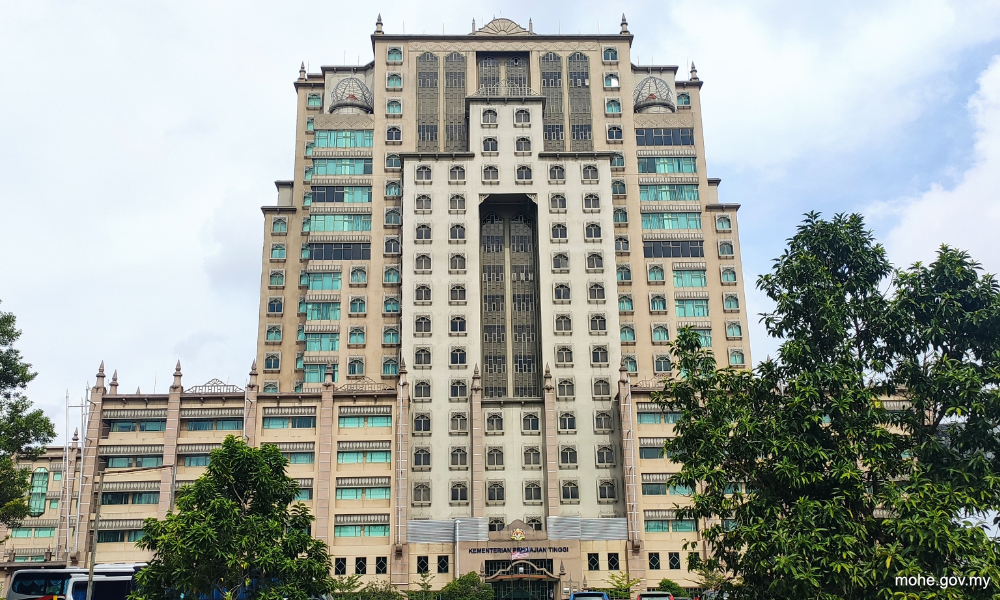
In one reply from the Public University Admissions unit (BKPA), the only response given was:
“Setelah membuat semakan, pihak BKPA mendapati bahawa calon adalah pemegang kad OKU bagi kategori Pembelajaran-Autisme.”
(After checking, BKPA found that the candidate is a disabled person cardholder in the learning-autism category)
No further justification was provided. The system merely acknowledged the student’s disability status and then ceased engagement.
In another case, a student stated: “Setelah menyemak fasa 3 permohonan UPU, data tersebut telah hilang. Saya telah melepasi syarat am dan syarat khas bidang yang telah dimohon.”
(After reviewing phase 3 of the UPU application, the data was lost. I have passed the general requirements and special requirements for the field I have applied for.)
These examples are more than bureaucratic mishaps, as they reflect a system that quietly denies deserving students their future.
Stop punishing disabled students for existing
We do note that this matter has now been raised through official platforms and that the relevant departments and ministries have taken swift steps to remedy the problem.
Nevertheless, we urge further decisive and transparent action to address the root of this issue, ensuring that such systemic barriers are permanently removed and do not recur.
Education is supposed to be limitless. It is meant to open doors, to create opportunities, to help us reach the sky. But the way this system operates, it feels as though that sky is only reserved for a select few and disabled students are told to stay grounded, to settle for less.
And these are just the cases that have reached us - the ones that have found their way to community representatives and spoken up.
What about those who quietly accept these limits, believing this is their only chance to study? What about those who choose silence because it’s either accepting restricted options or losing the chance at education altogether?
This ongoing discrimination particularly harms autistic students, those with learning disabilities, and sensory disabilities, whose access needs differ from accessible physical infrastructure but could be met by supportive academic environments.
Denying them entry to courses like mathematics, computer science, or statistics is unjustifiable and rooted in long-established prejudice rather than policy.
We urge the following steps to be taken:
- A clear explanation from the Ministry of Higher Education on why filtering persists, supported by system documentation and transparency in decision-making.
- A review of disability-based filtering in UPU and the reinstatement of course options for affected applicants, with recognition that disabled students are not a homogenous group and have differing accessibility needs that require flexible, human-centred approaches.
- An audit of admissions data from 2020 to 2025 and publication of findings on the treatment of disabled applicants.
- The removal of exclusionary disability clauses from course requirements across all public universities.
- Creation of a fair complaint and appeal mechanism that protects applicants from penalties.
- Meaningful engagement with disabled person-led organisations and lived experience experts in shaping education policy reforms, ensuring future education policies reflect the diverse realities and accessibility needs across different disability groups.
We would like to reiterate, Malaysia ratified the UNCRPD in 2010, committing to equal access to education. Yet, year after year, disabled students face structural exclusion masked as “system limitations”. This is also disproportionately affecting learners with disabilities.
Above all, education is so vital to everyone.
Why slam the door on their dreams?
Why are we doing this to people with disabilities? Why are we restricting their choices and making them feel like their dreams and opportunities don’t matter?
At a time when this country desperately needs more youth contributing their skills and knowledge towards nation-building, why are we shutting out those who are ready to give back? We ask why we don’t see more disabled leaders, but how can we, when we keep excluding them from the very start?
For most Malaysians, public universities are their beacon of hope. They are the places where the rakyat place their trust, believing education can open doors to a better quality of life.
Disabled students hold those same hopes to sit side by side with their peers, not as charity cases or exceptions, but as equals with the same hopes and dreams.
Yet we continually make it harder for them, compounded by obstacles and extra costs that narrow their choices and shut them out of paths they deserve. Not everyone has the means to turn to private universities.
Have we really stopped to look at what that means? To feel what it’s like to be told your ambition is not valid because of who you are? If we speak of Malaysia Madani, shouldn’t this be where we start, by asking how we treat those who most need our solidarity, and whether we are truly willing to open the doors that we keep promising will be open to all?
And this comes at a time when Malaysia is chairing Asean, proudly speaking of inclusion and regional progress. Yet here we are, with our own education system quietly closing its doors on disabled students.
How do we claim to lead an “inclusive Asean” when our own policies fail those at home? Are we truly making the changes we declare on international stages, or are we content with slogans while systemic barriers remain? If we are serious about being inclusive, it must begin here, in our own institutions, in the way we treat our own rakyat.
Education is supposed to open doors, not close them. Yet here we are, watching those doors shut for some of the very students who most need them.
These are just the cases that reached us, but we know there are many more who stay silent, accepting limits because they feel they have no choice.
We cannot build a truly inclusive Malaysia or an inclusive Asean if our own systems continue to exclude. This is not only a policy failure, but it is a moral one.
We, the undersigned, call on the Higher Education Ministry, public universities, and all responsible authorities to act now. And above all, honour the promise of education as a right for all.
We need to echo Malala Yousafzai’s words, “One child, one teacher, one book, one pen can change the world”, reinforcing the transformative power of education for all.
The disabled community needs this more than ever to nurture stronger leaders and shape our shared future. Let our disabled students be free to chase their dreams.
Signatories
- Beatrice Leong, autistic gender-disability activist, independent documentary filmmaker.
- Dr Amar-Singh HSS, consultant paediatrician, child-disability activist.
- Ng Lai Thin, inclusive educator, disability-inclusion advocate, author of “Small Steps, Big Changes for Preschool Inclusion”.
- Yuenwah San, disabled rights-ageing-gender intersectionality advocate.
- Anit Kaur Randhawa, parent advocate, advocate and solicitor.
- The OKU Rights Matter Project
- Ngau Kao Pin, chartered accountant, father of a level 2 autistic boy.
- Dr Shyielathy Arumugam, parent advocate
- Tina Yap Li Yan, social worker
- Dr Ezura Madiana Monoto, family medicine consultant UKM, mother to two disabled children.
- Aziph Mustapha, head of culture and engagement, and father to a 17-year-old who’s neurodivergent, curious, and wonderfully wired in his own way.
- Rafidah Rafizah Ahmad, disability activist, founder and president of Gabungan Anak-Anak Palsi Serebrum (Gaps), mother of a young adult with cerebral palsy.
- Melanie Oh, executive director, mother of a child born with Down Syndrome.
- Dr Wong Tze Peng, speech-language therapist, university faculty member in special and inclusive education.
- Yap Sook Yee, disability activist and mother of a child with spinal muscular atrophy.
- Ch’ng B’ao Zhong, autistic adult, licensed and registered counsellor.
- Lee Sook Foong, operations director at Kiwanis Down Syndrome Foundation National Centre
- Srividhya Ganapathy, co-chairperson Crib Foundation, child-disability activist, adult with ADHD.
- Persatuan Kebajikan Sokongan Keluarga Selangor & KL (Family Frontiers)
- Dr Ching Bih Hwa, developmental paediatrician, Regency Specialist Hospital
- Khoo E-May, late diagnosed autistic adult, disabled, HRDC accredited trainer, self-advocate.
- Bathmavathi Krishnan, wheelchair-using student, University of Malaya 1976-1978; senator at Parliament Upper House 2013-2016, 2016-2019.
- Ser Kwee Mui, mother of a young adult with ADHD and autism.
- Dr Lee Hwee Ming, rehabilitation physician, and father to an autistic child.
- Dr Kuria Dip Silas, mother to an autistic child.
- Desiree Kaur, parent advocate, Project Haans founder and Kita Family podcaster.
- Nik Nadia Nik Mohd Yusoff, parent advocate, moderator of Autisme Malaysia Facebook and Kita Family podcaster.
- Faizura Nazri, mother to an autistic child.
- Joyce Teoh Lay Bee, parent advocate, Persatuan Alumni Kiwanis Down Syndrome Foundation Kuala Lumpur dan Selangor (Alumni KDSF)
- Persatuan Kesedaran Komuniti Selangor (Empower)
- Siuman Collective
- Hasbeemasputra Abu Bakar, disabled disability advocate
- Tay Chia Yi, speech-language therapist
- Dr Siti Sarah Aishah Suhaidi, mother of an autistic child and paediatrician.
- Dr Balkis Nachiah, medical officer UD14 and parent of autistic children.
- Soheir Khatib, parent
- Alvin Teoh, parent advocate
- Tracey Tan, parent
- Aaron Lim Hong Rong, member of Dewan Muda Johor (Jawatankuasa Pendidikan dan Penerangan)
- Nadiah Hanim Abdul Latif, child rights advocate
- Teong Chia Ying, occupational therapist
- Teo Chai Hoon, parent
- Goo Tzy Yeen, speech and language therapist
- Tok Swei Ing, parent
- Koh Lee Kiaw, parent
- Intan Nahariah Yaacob, parent and advocate for neurodiversity at work.
- Sherrene Teh, registered music therapist
- Allida MS, rare disease advocate
- Retired senator Ras Adiba Radzi, president of Persatuan OKU Sentral & Persatuan Para Menembak Malaysia.
- Leonard Ng, spouse & Spell user
- Kwan Wei Yen, parent
- Sah Henn Wei, parent
- Dunstan Lim, chairperson & advocate, Sarawak OKU Skills Development Association (Sosda)
- Izyan Nadiah Noh, disability-inclusion advocate, mother of a rare disease child.
- Raizil Emeli Juzilman, parent of an autistic son
- Ayu Syahira Zaili, parent
- Dr Fahmi Hassan, pharmacist
- Jeremiah Liew Yong Sin, lecturer and registered counsellor
- Nur Firdaus Zulkifli, medical student
- Naziaty Yaacob, PhD, director, Xiron ES, and person with multiple disabilities.
- Miza Marsya Roslan, individual with rare disease and rare disease advocate.
- Ili Akmal binti Mohd Razif, individual with ADHD, asperger, and mild autism.
- Izzat Zaid, registered clinical psychologist
- Khairudin Rohani, chemist
- Darshan Singh, parent
- Surendra Ananth, advocate and solicitor
- Ahmad Razif Abdul Wahab, parent to autistic children
- Nurulhuda Zaki, ADHD and registered psychologist, founder of Shine and Hope Therapy.
- Nur Adilah Nasser, registered clinical psychologist
- Toh Ting Jii, PhD student with AuDHD, mother to three boys with ADHD and autism.
- Ivy Josiah, activist
- Nazril Aizudin Nasser Ansari, autistic student, one of the victims affected by the discriminatory filtering.
- Dr Goh Xin Yi, dentist and clinical hypnotherapist
- Siti Norziyana, president, Persatuan Dyslexia Malaysia
- Aiman Amri, registered clinical psychologist
- Lim Yee Hong, Level 1 ASD student & advocate
- Zatur-Rawihah Ismail, parent
- Alicia Chui, Level 1 ASD & advocate
- SIS Forum (Malaysia)
- Law Phoy San, parent
- Nur Hana Liyana Yusli, ADHD, Level 1 ASD, autistic advocate
- Tan Shi Yee, Level 1 ASD, advocate, accounting lecturer, neuroinclusive trainer, PhD candidate, student of Master of Arts in Psychology.
- Nur “Alyaa” Basyirah Nor Israj, autistic and Diploma in Science student, UiTM Tapah.
- Koh Wee Sun, chairperson of Persatuan Penyayang Kanak Kanak Istimewa Johor Bahru.
- Chiau Boon Wei, parent
- Chong Chia Wen, parent
- Yeoh Ming Hwan, ADHD adult with disabled person card, art college lecturer.
- Emelyn Lee, Level 1 ASD
- Fairus Farihah Remly, former volunteer for Persatuan Mahasiswa Istimewa Universiti Malaya (Permium), disability inclusion advocate.
- Jack Leong, level 1 ASD
- Nick Ng, level 1 ASD
- Emma, former volunteer for Persatuan Mahasiswa Istimewa Universiti Malaya (Permium), disability inclusion advocate.
- Abdul Adieka Amirul, MDD & Type 1 ASD, autistic self-advocate.
- Gracious Yoong Chen Xin, ADHD and Level 1 ASD adult, self-advocate, student of Master of Arts (Visual Arts) at Universiti Malaya.
- Ooi Ivan, ADHD+ Level 1 ASD, secondary school teacher.
- Dr Ali Azman, consultant paediatrician and parent advocate, Green Apple Hippotherapy.
- Meera Samanther, parent advocate, women’s rights activist
- Vince Leong, mentally ill person, digital marketing analyst
- Jacintha Roland, parent
- Moses Choo, blind advocate for disabled persons’ rights, and former member (2016-2021), National Council under the Persons with Disabilities Act, 2008.
- Irene Wong, mother of twins with ASD level 1, quality assurance team lead, Integrated DNA Technologies PTE Ltd.
- Stephanie De Souza, speech language therapist
- Wo Su Woan, lecturer
- Deaf Advocacy and Wellbeing National Organisation (Dawn)
- Ahmad Fawaz, adult with ASD
- Dr Cheah Boon Eu, medical officer & neurodivergent individual
- Salim Harmanain, advocate & solicitor with cerebral palsy, disability advocate.
- Dr Mastura Mahamed, academician, media trainer, disability inclusion advocate, and person with cerebral palsy.
- Alyson Su Ying Yeng, parent of autistic child
- Haryati Mohd Nordin, parent of autistic child
- Wan Maryam Wan Zulkipli, adult with ADHD and ASD, mild to moderate.
- Christine Lee, wheelchair user and disability advocate.
- Sam Wong, wheelchair user & disability advocate.
- Lim Tien Hong (PhD), blind advocate for the rights of persons with disabilities.
- Nur Zahra Rihana Azam, matriculation student
- Fatimah Az-Zahraa Amir Farid, occupational therapist
- Low Wei Lun, adult with autism
- Zaini Mat Abas, co-founder, Pertubuhan Kebajikan Pondok OKU
- Nazean Jomhari, researcher and lecturer at Universiti Malaya, co-founder of Yayasan Faqeh.
- Rohaniza Jamili, parent of a neurodivergent child.
- Derrick Tan Jia Xin, Level 1 ASD
- Lee Khiam Jin (PhD), vice president, Minds Association of Penang, parent.
- Loh Cheng Kooi, activist
- Mariam Lim, activist
- Ivy Tan Jia Bao, board-certified music therapist, founder of Life Tunes Music.
- Dr Aida Abdul Aziz, consultant radiologist, Gleneagles Hospital Johor, and mother of an autistic son.
- Chai Tze Ru, trainee clinical psychologist
- Engku Mohd Hairulnizam Tuan Ahmad, chairperson, Persatuan Autisme Terengganu (Paut).
- Hasbe Zuraini Abu Bakar, committee, Persatuan Autisme Terengganu (Paut)
- Nurulhuda Mohammed, mother of a magnificent asperger HFA son.
- Tee Sook Sing, secretary of Persatuan Penyayang Kanak-Kanak Istimewa JB, mother of 2 children.
- Chu Maw Nian, father of vision-impaired disabled child
- Dawn Tan, parent
- Qistina Ellysha Rashid, trainee clinical psychologist
- Cheng Miao Shan, trainee clinical psychologist
- Karen Kee, mother to a son with ASD Level 1
- Norsuriani Che Musa, mom of a CP boy.
- Samuel Kai Mun Chew (PhD), Interpreter (BIM, ASL, and IS - spoken English, Malay, and Mandarin)
- Nurul Izzah Abdul Aziz, mom of CP boy
- Khairul Musa, NGO
- Vasanthi Govindan, guardian of autistic teenager
- Tau Fong Kian, mother of autistic son
- See Seow Chu, computing analyst and part-time teacher
- Nadia Mohd Ismail, mother to an ASD Level 1 daughter
- Noor Hafizar Hashim, mother of CP boy
- Dr Adli Azam, consultant cardiothoracic surgeon, Gleneagles Hospital Johor, father of autistic son
- Malicca Ratne, president, Soroptimist International Pearl of the Orient
- Dr Nadirah Babji, medical doctor and public health/gender researcher.
- Wang Shu Xiang, physiotherapy, NGO
- David Ananth, charter president of Rotary Club Klang Central
- Fatimah Insyirah Ahmad Kamal Peong, teacher at an autism centre.
- Rev Ong Bee Leng, chairperson of Pertubuhan Kebajikan OKU Beacon and parent advocate.
- Teh Guih Poo, mother of an autistic son
- Esther Ng Zi En, trainee clinical psychologist
- Dr Wong Woan Yiing, paediatrician
- Loke Pui Kuan, mother of an ASD child
- Manjula Aryaduray, secretary, Gabungan Anak-Anak Palsi Serebrum (Gaps), mother of a teenager with cerebral palsy.
- Saravanan Selanduray, audiologist
- Kashmira Thiagarajan, trainee clinical psychologist
- Dr Izam Suziani Ismail, autism advocate & care partner, Spell licensed user.
- Ng Kok Ping, father of ASD Child,
- Dr Shobhana Sivandan, radiologist UD15
- Dr Sankari Ganesh, child & adolescent psychiatrist
- Noraishah Ismail, concerned citizen
- Dr Connie Teo Kai Ru, paediatrician
- Ivy Peik Luo Yin, mother of two visually impaired boys
- Chai Jing Yun, autistic adult
- Dr Ngim Chin Aik, cardiologist
- Dr Woon Teck Kim, paediatrician
- Kok Huey Huey, mother of two ASD kids.
- Moong Lee Peng, mother of a child with Krabbe
- Arwinderjit Singh, dad of twins
- Gan Jun Qi, parent to an autistic child, entrepreneur.
- Nur Athirah Mohd, mother of CP girl and sister at Peads ICU HM
- Karina Yong Ker-Ai, senior policy researcher, and public health advocate
- Ooi Choon Ee, adult with ADHD, gym owner
- Nurhidayatul Diana Ahmad Zaidi, adult with ADHD
- Sam Loh
- Dhania Sorfina Md Zaki Fadzil, ADHD, disabled person, paediatric occupational therapist, founder of At Peace Therapeutic Space.
- Fahda Nur Ahmad Kamar, member of the board of advisors, Anak Istimewa Selangor (Anis)
- Madeleine Chang Huijia, trainee clinical psychologist
- Azhanni Che Mo’in, mother to an autistic child
- Syuhanaz Saharudin, stepmother to an autistic + ADD teenager
- Dr Michelle Chan, parent of a child with ASD
- Syafiqah Saharudin, speech language therapist
- Dr Louis Siao, dentist
- Dr Wong Leh Chen, medical officer
- Siti Athirah Saharudin, IT officer
- Erni Fadzila Saharudin, housewife
- Cham Kam Fong, teacher (PPKI), mother of a DS
- Hazree Zakaria, parent of an ASD child
- Nor Hazairianty Abdul Razak, parent of an ASD kid
- Mahanif Mamat, parent of an ASD child
- Laura Kho Sui San, Mind Brew, Mental Health Association of Sarawak
- Nur Nadhirah Aqmar Izzar, adult Asperger’s
- Hamidah Ismail, parent advocate
- Dr Choy Sook Kuen, parent advocate, founder of Intervention Centre, Kita Family podcaster.
- Samudiswary Goby, parent of CP child
- Ramanitharan Annamalay, parent of CP child
- Lim Seh Cheen, parent
- Chua Hsiao Shang, parent of an ASD child.
- Nor Syazwani Aziz, parent of specific learning disorder child
- Hanifah Halit, parent of ASD son
- Nurfazila Yanti Fawzi, parent of CP child
- Melanie Cheong Suet Mei, proud parent of ASD teen
- Kevin Lim Li, advocate
- Sandhya N Sathesh, sister of an adult ASD sibling
- Preetha Pillai, mother of an ASD son
- Ong Yai Peng, mother of an ASD son
- Teo Hwee Joo, mother of an ASD & ADHD son
- Sia Jia Lin, mother of an ASD child
- Chia Wei How, father of an ASD child
The views expressed here are those of the author/contributor and do not necessarily represent the views of Malaysiakini.