The Malacca state legislative assembly has passed an amendment to its state constitution to allow for appointed assembly members.
The Malacca State Constitution (Amendment) Bill 2026 was passed by a show of hands, with 23 assembly members voting in favour and five against.
Among those who supported the amendment was the state’s opposition leader and Bemban assemblyperson Yadzil Yaakub.
Only three assemblypersons took part in the debate: Yadzil, who was sacked from Bersatu earlier this year, Umno’s Rim assemblyperson Khaidhirah Abu Zahar, and MCA’s Kelebang assemblyperson Lim Bang Hong.
DAP’s Ayer Keroh assemblyperson Kerk Chee Yee attempted to interject and voice his objections to the amendment but was rebuffed.
For diverse representation
In his speech proposing the amendments, Malacca Chief Minister Ab Rauf Yusoh said that including appointed state assembly representatives would enable representation across Malacca’s more diverse community, including women, professionals and Orang Asli members.
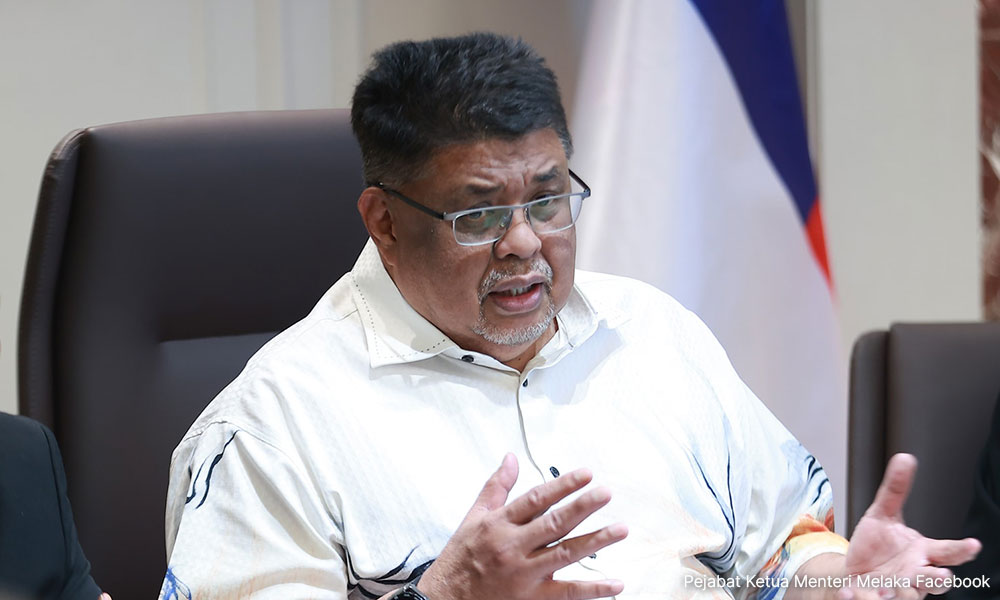
“This appointment could increase the participation of women, youth, Orang Asli, minority communities, professionals or representatives of industry sectors who may not have succeeded through the election process but are capable of contributing to the state’s development.
“Several other states also have provisions to appoint assembly members or additional members to strengthen legislative functions and ensure a more inclusive composition of the assembly. Such appointments are part of the state’s constitutional mechanism,” Rauf added.
The amendments
Clause 2 seeks to amend Article 11 of the Malacca constitution to include a provision for appointing not more than seven members to the state assembly.
Clause 3 seeks to introduce new Articles 11A, 11B and 11C.
Under new Article 11A, appointed members shall be appointed by the governor upon a motion supported by at least seven assembly members and approved by a simple majority.
No person shall be appointed as an appointed member unless they are a resident of Malacca.

An appointed member must vacate their seat in the state assembly if they resign, if a resolution to remove them is passed by a motion supported by at least seven assembly members and approved by a simple majority, or if the state assembly is dissolved.
They must also vacate their seat if the appointment is terminated in the public interest under new Article 11B. The state speaker will determine the date of vacating the seat, whichever occurs first.
An appointed member also cannot be appointed chief minister or as an exco member.
They can speak by participating in debates in the assembly and in committees to which they have been appointed as a member, and they can vote, subject to the limitations provided under Article 11B.
They can also enjoy any rights and privileges provided to elected members.

Under Article 11B, the governor may, on the advice of the chief minister, terminate the appointment of an appointed member without any obligation to provide reasons.
This is if the governor considers such termination necessary in the interests of the nation or Malacca, in the interests of national security, or for the purposes of government policy or public policy.
The state government will solely determine the interests of the nation or Malacca state, national security, government policy and public policy. Such decisions will be final and cannot be challenged or questioned in any court.
Under new Article 11C, it is explained that Articles 12, 13, 14, 15, 17, 18, 21 and 25 of the state constitution shall apply mutatis mutandis (with the necessary modifications) to an appointed member.
The amendments do not explicitly stipulate if the appointed representatives can also vote on confidence motions.
State reps weigh in
During the debate, Yadzil proposed limiting the number of appointed representatives to a maximum of five, and suggested they should not have voting rights on confidence motions or matters affecting the people’s mandate.
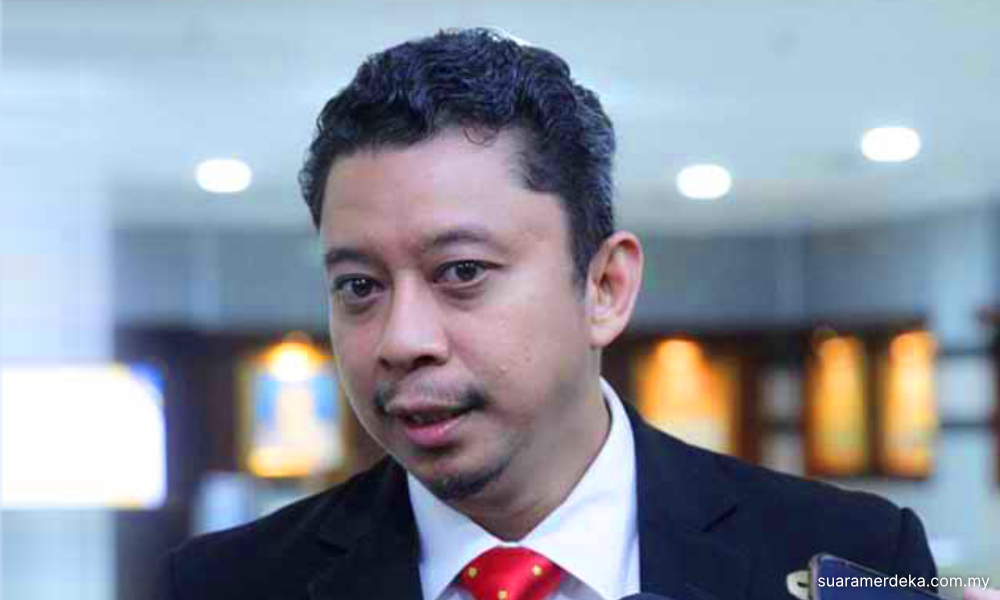
Lim, in his speech, said the move to include appointed state assemblypersons would serve as a complement, while elected representatives would continue to play a more pivotal role.
He added that the appointed members could function as an opposition voice to maintain checks and balances.
Khaidhirah, meanwhile, said that while there had been a suggestion to appoint them as advisers instead, advisers work behind closed doors and in an exclusive setting.

She said that state assembly representatives, on the other hand, can put forward ideas, suggestions and proposals openly in the assembly, making the process more transparent.
She also reminded that the position should not be handed out as a consolation to any party representative who loses in the state election, or to those with close personal ties to members of the state government.